Professor Chan Heum Park's Team at Hallym University Chuncheon Sacred Heart Hospital Sends Their Self-Developed "BioCabinet" to Space Aboard Nuri Rocket
Comunicato Precedente

Comunicato Successivo


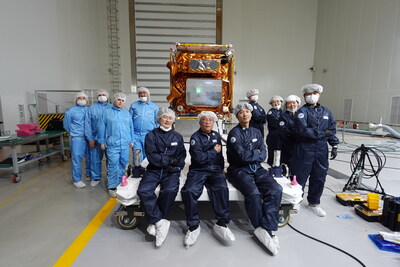
BioCabinet to 3D-Print Heart Tissue in Space
The payload has two modules: the first observes beating and contraction of cardiac tissue 3D-printed from induced pluripotent stem cell–derived cardiomyocytes; the second evaluates blood vessel differentiation using tonsil-derived stem cells, ideal for terrestrial and space studies.
BioCabinet is expected to generate core data for organ fabrication and cardiovascular research in space, marking South Korea's first acquisition of biological tissue data under environmental variables such as pressure, temperature, and radiation.
Beyond Terrestrial Limits, Seeking Answers in Space
Space research overcomes Earth-bound limits, where gravity hinders 3D tissue formation. In microgravity, cells grow naturally into 3D structures, and drug crystallization improves, enabling high-purity anticancer compound production. Artificial heart-beating data from this study will aid cardiovascular drug development.
From BioCabinet to BioRexs, to BioLiv… The Challenge Continues
Professor Park is expanding space bioengineering research based on the BioCabinet platform. He is developing BioRexs, a drug-screening platform slated for launch in 2027 to culture glioblastoma in space and evaluate anticancer drug efficacy. In parallel, he is leading the BioLiv project, which aims to 3D-print and culture artificial liver tissue in space and return it to Earth for transplantation. This is expected to become the world's first non-clinical study using a space-fabricated artificial organ.
In addition, follow-up space bioengineering projects such as BioFactory, BioDeep, BioLunar, and BioMars are also underway.
Professor Park emphasized the importance of national investment, stating, "Conducting research in outer space is not about pursuing short-term profit—it is about creating technologies that shape the future." This mission represents Korea's first step into space-based bioengineering, establishing the nation's foundation for biological tissue 3D printing research and verifying stem cell survival and cardiac tissue formation in the space environment.
Photo - https://mma.prnewswire.com/media/2831535/Professor_Park_and_his_research_team.jpg
 View original content:https://www.prnewswire.co.uk/news-releases/professor-chan-heum-parks-team-at-hallym-university-chuncheon-sacred-heart-hospital-sends-their-self-developed-biocabinet-to-space-aboard-nuri-rocket-302625350.html

Ufficio Stampa
PR Newswire (Leggi tutti i comunicati)
209 - 215 Blackfriars Road
LONDON United Kingdom