Knorr will launch 50 regenerative agriculture projects across the world to reduce food's impact on the climate
Comunicato Precedente

Comunicato Successivo
Knorr's 50 regenerative agriculture projects build on more than 10 years of sustainable agriculture collaborations with farmers and suppliers which has resulted in 95% of Knorr's vegetables and herbs being sustainably sourced, globally, and 99% in the UK. With food contributing to more than one third of greenhouse gas emissions and being a leading cause of soil and species loss**, sourcing and growing in a way that minimizes impact is not enough.
"We need to work with nature and ecosystems – not against. Earlier this year we launched Unilever's Regenerative Agriculture Principles to support the growing of food with a positive impact on nature. Now Knorr is putting the principles into practice – and sharing learnings along the way so that others can do the same."– Hanneke Faber, Global President of Foods and Refreshment, Unilever
These regenerative agriculture projects will be phased over the next five years, to be scaled to 50 projects with partners by 2026, globally. The three projects started this year are showing promising results.
Knorr's regenerative agriculture roadmap is part of the Unilever Climate & Nature Fund, a €1 billion fund that will accelerate the organization's work on nature and climate projects. Knorr's plan will contribute to Unilever's commitment to help protect and regenerate 1.5 million hectares of land, forests, and oceans by 2030.
As the largest food brand within Unilever, Knorr is suited to use its position in the supply chain and in the market to test and learn and scale implementation, all while sharing learnings and knowledge with a coalition of partners and academics to transform the way food is grown– for good.
The key ingredients (vegetables, herbs, spices, grains) grown using regenerative agriculture principles will be in Knorr's products which are sol 3.1 billion times a year across more than 90 countries. This project plan is crucial to Knorr's purpose to reinvent food for humanity with the ambition to get food that is good for people and the planet on seven billion plates by 2025.
About Knorr
Knorr's passion for better cooking and eating goes right back to the brand's beginnings in 1838. Knorr is proud to be the 8th most chosen FMCG brand in the world (according to Kantar World Panel) and Unilever's largest food brand. Knorr products are sold in more than 90 countries around the world and the products are chosen 3.1 billion times per year, in 379 million homes annually. The recipes on Knorr websites inspire more than millions of people each year. Knorr's purpose, globally, is to reinvent food for humanity. In 2019 Knorr, together with WWF-UK launched the Future 50 Foods as a thought leadership piece, stating the ambition to get food that is good for people and the planet to the masses. In 2021 Knorr created World Eat for Good Day – calling the world to take action to change the world by changing what's on your plate. Knorr's investment in regenerative agriculture is the next step on the journey to reinvent food for humanity.
For more information about Knorr's purpose visit knorreatforgood.com and for more about Knorr Future 50 Food visit knorrfuture50foods.com.
*This was calculated based on estimations of impacts of Unilever's Regenerative Agriculture Principles
** Willett, Walter, Johan Rockström, Brent Loken, Marco Springmann, Tim Lang, Sonja Vermeulen, Tara Garnett, et al. "Food in the Anthropocene: The EAT–Lancet Commission on Healthy Diets from Sustainable Food Systems." The Lancet 393, no. 10170 (February 2019): 447–92. https://doi.org/10.1016/S0140-6736(18)31788-4.
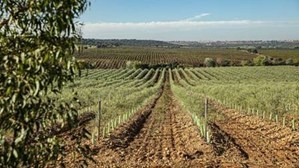
Photo - https://mma.prnewswire.com/media/1672670/Knorr.jpg

Ufficio Stampa
PR Newswire (Leggi tutti i comunicati)
209 - 215 Blackfriars Road
LONDON United Kingdom

